The starting point: registrations on paper
Before introducing Clutch, the Malta Basketball Association was looking for a way to modernise player registrations. In its published testimonial, Secretary General Joseph Muscat describes a process handled manually, with substantial paperwork and filing.
That is a practical problem for a federation and its clubs: the registration information has to be prepared, checked and found again. Digitising the process is valuable when it connects those responsibilities rather than simply moving a paper form onto a screen.
What the association says changed
The association describes registrations as simpler, faster and more efficient after introducing Clutch. It also reports saving valuable time and reducing administration.
The testimonial points beyond registration, too. It describes bringing competitions, fixtures, statistics and club management together in one place. That connection is the focus of Clutch: information prepared for one part of the sporting week should remain useful to the people responsible for the next part.
“Registrations are now simpler, faster and far more efficient.”
A workspace for federation responsibilities
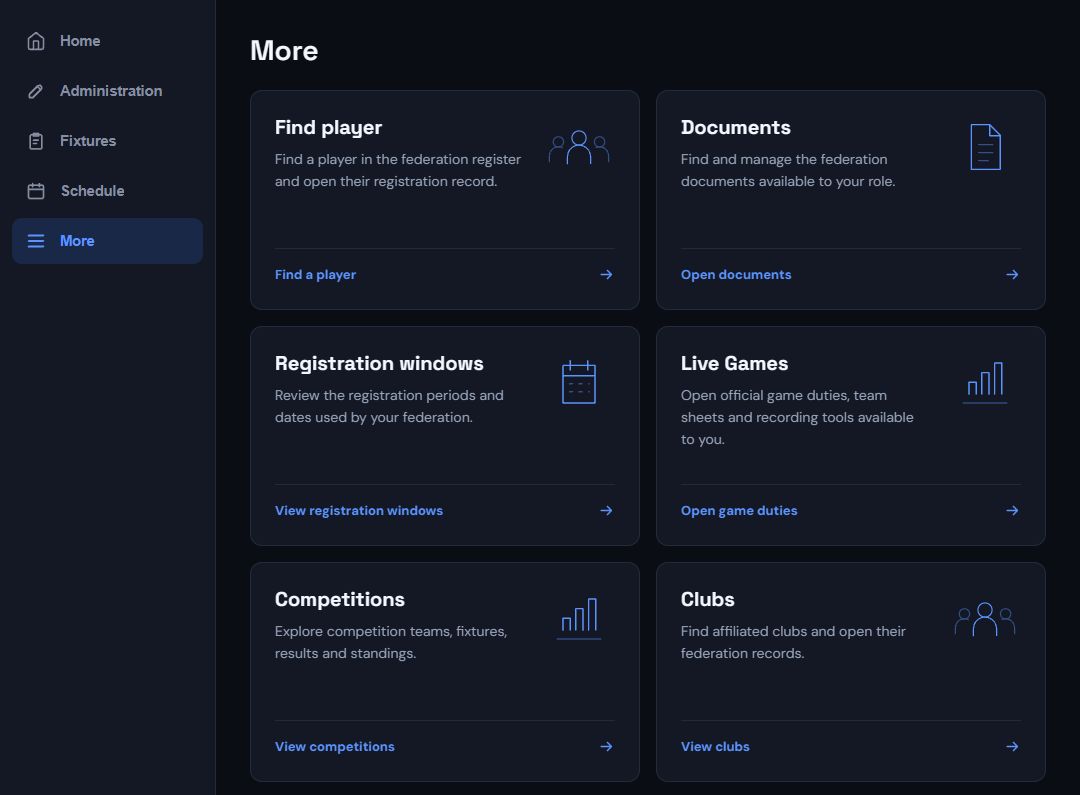
Clutch gives federation staff clear entry points for finding player registration records, accessing documents and reviewing registration windows. Competition tools sit alongside the administration tools, with routes to fixtures, results, standings and affiliated clubs.
A staff member can start with the task in front of them: find a player, check a registration period or open a competition. The tools and information available to each person depend on their assigned role.
The club side of the connection
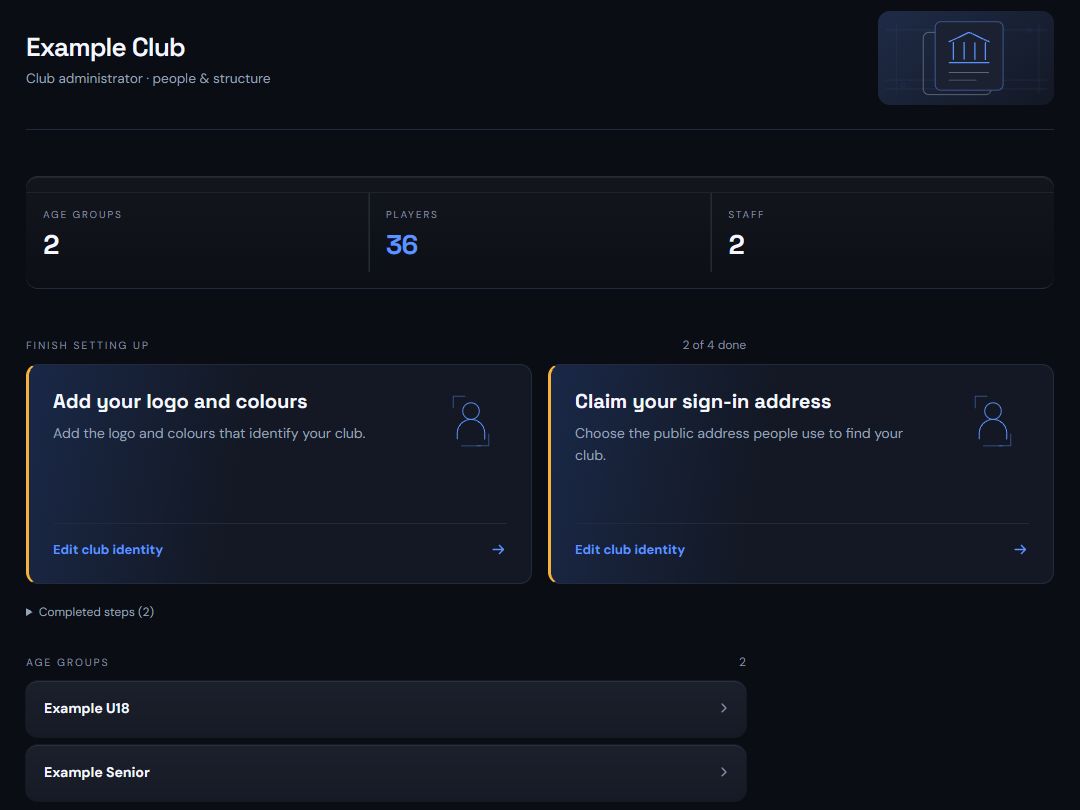
A federation process also needs to work for the club preparing its information. In Clutch, club administrators can organise age groups, find their rosters and manage staff. The club overview brings those responsibilities together with clear actions.
Club membership, a team assignment and official registration are distinct. Being listed in a club’s roster should not be mistaken for federation approval. A useful demonstration follows the record through the relevant club and federation steps so both sides can check what happens next.
What another federation should test
The MBA experience is a local reference, not a promise that every sport follows the same rules. Required fields, registration windows, documents and review responsibilities need to reflect the federation using the system.
Bring one typical registration process to a demonstration. Follow a fictional player from the club’s preparation to federation review, then check how staff find the record again. Include a correction and a rejected submission, not just the successful route.
Also check who can see each item. Club staff, coaches, players, parents and federation reviewers have different responsibilities. A connected system needs to preserve those boundaries while making the next action clear.
A reference grounded in the association’s experience
This story draws on the Malta Basketball Association testimonial already published by Clutch. Its assessment is qualitative: the association reports a simpler registration process and less administration. Measured time savings and adoption figures are not part of this case study.
To explore the same approach for your federation, start with your existing registration process and the work your clubs need to complete. Clutch can then demonstrate the relevant tools and discuss the configuration your sport requires.
Questions, answered
About this case study
Does this page show real player registrations?
No. The screenshots show the actual Clutch interface with fictional demonstration data. No private MBA player records are included.
Does a club roster entry mean a player is officially registered?
No. Club membership, team assignment and federation registration are separate. The applicable federation process determines official registration and eligibility.
Can another federation use the same registration rules?
The underlying tools can be demonstrated, but each federation’s required fields, documents, dates and approval responsibilities need to be reviewed and configured.